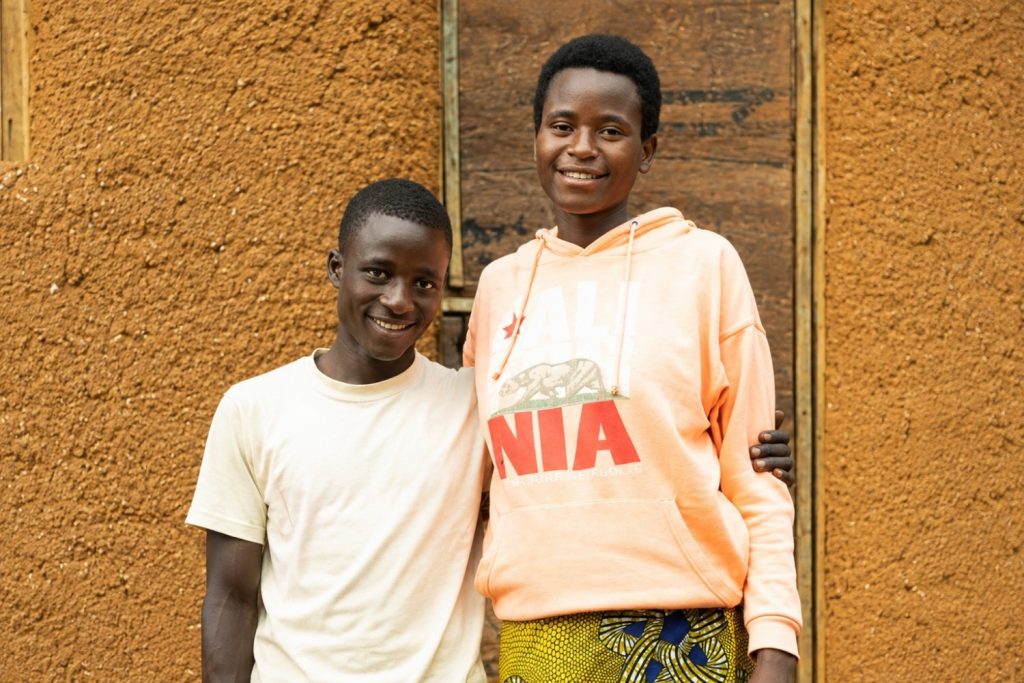
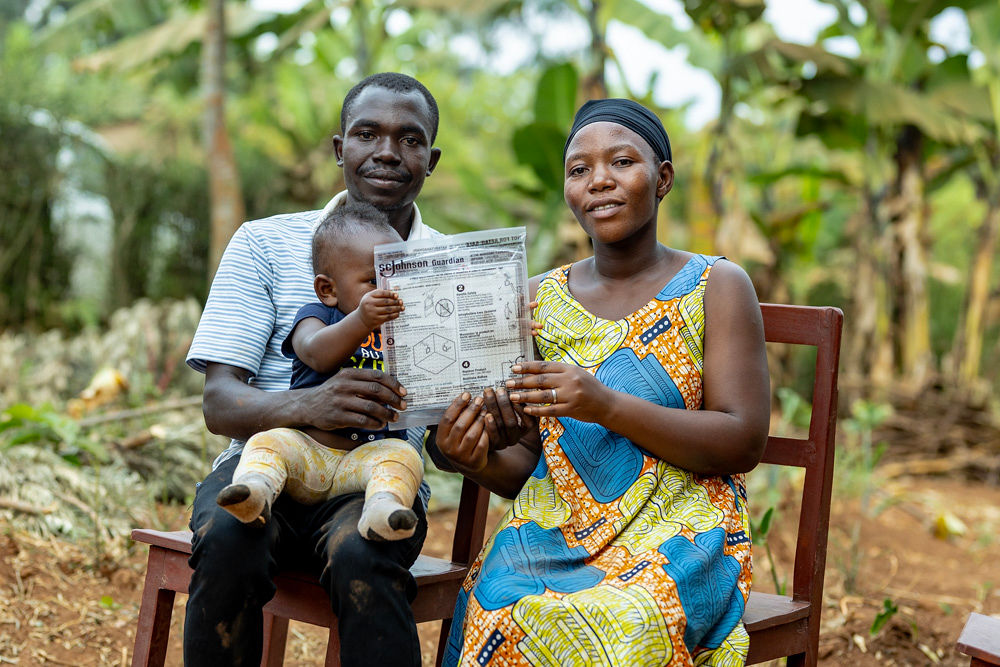
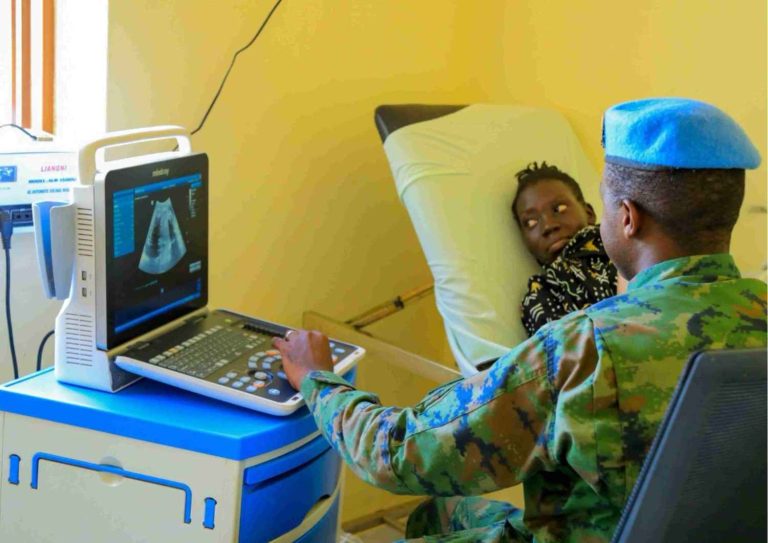
For Maritha and her husband, 22-year-old Ndayishimye Bosco, malaria prevention has always been part of daily life. Like many families in their community, they use mosquito nets and follow recommended practices such as closing doors and windows early in the evening. Bosco sums up their approach with a familiar Rwandan saying: “Kwirinda kuruta kwivuza” — prevention is better than cure.
Accessing care is also not always easy. A motorbike ride to the health center for antenatal care costs about RWF 2,500 one way, a significant expense for a young farming household. While Maritha remains committed to attending antenatal care, the cost and distance make prevention at home even more important.
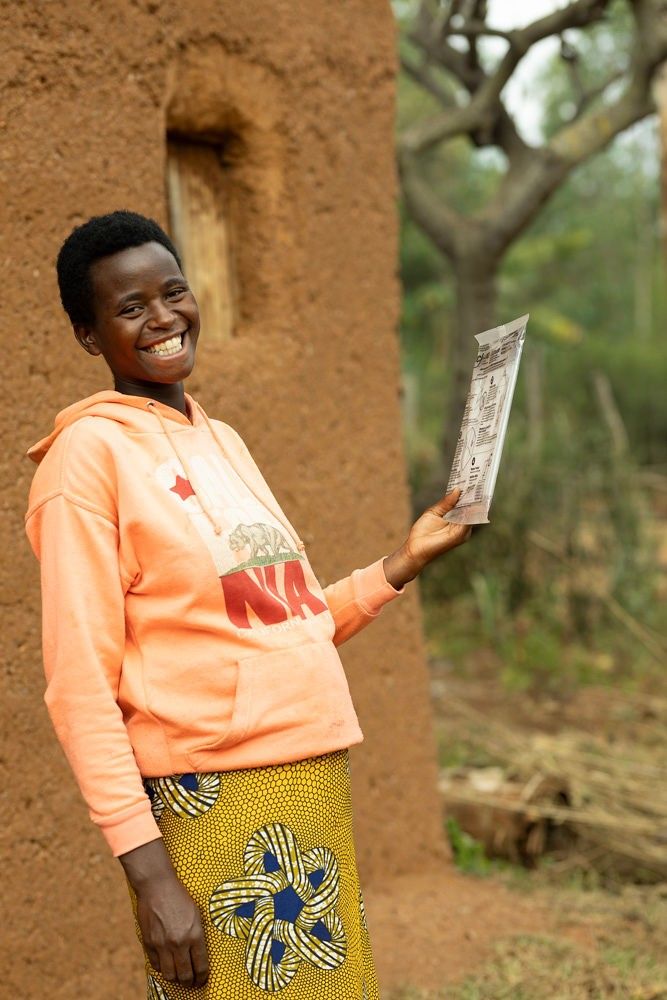
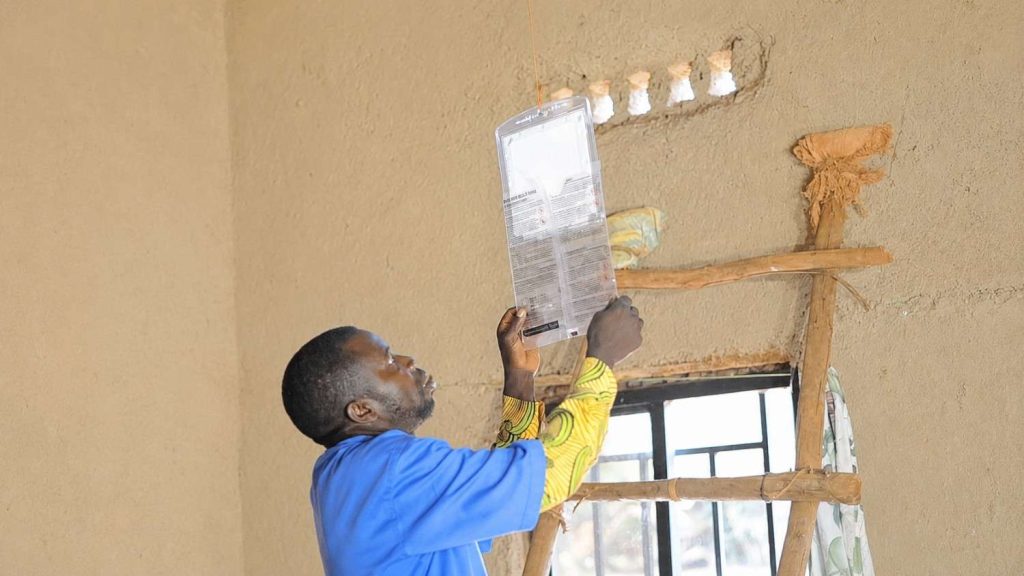
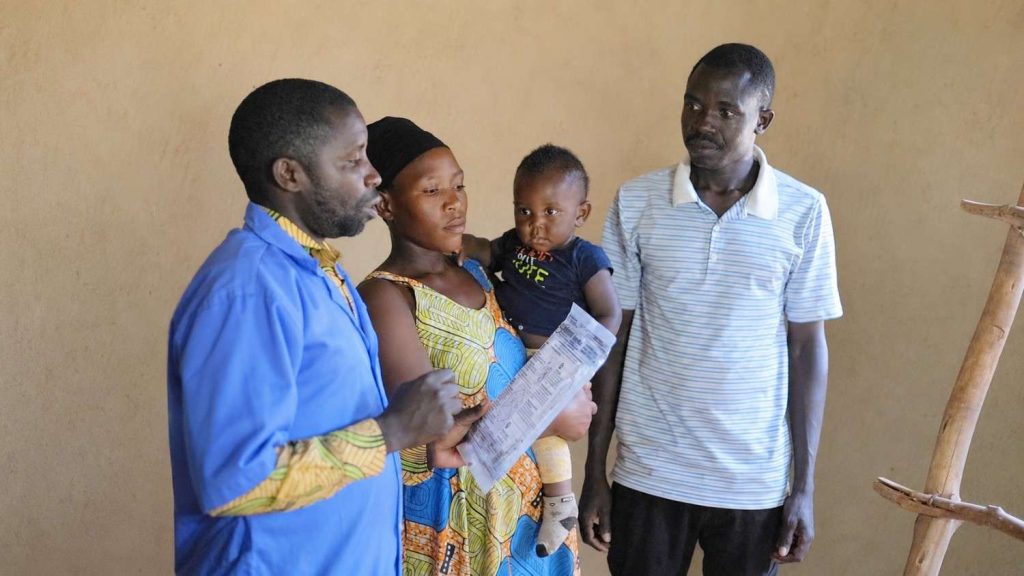
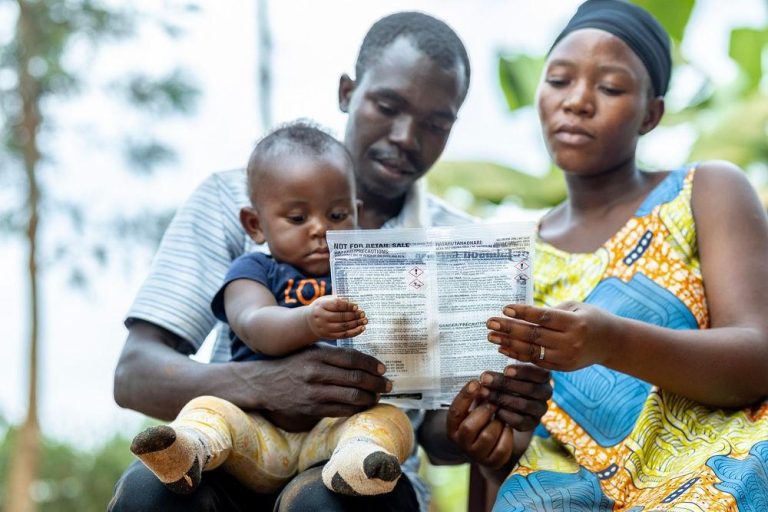
That is why the visit from community health workers became a meaningful moment for the family. During one of their routine household visits, community health workers introduced Maritha and Bosco to Guardian™ spatial repellent, explained how it works, demonstrated how to use it correctly, and provided the product to the household.
For Maritha, the change was felt quickly. “The tool is great because of its effectiveness,” she says. “We used to depend only on the mosquito net, but it was limited to the bedroom. Most times, I would find myself thinking about my unborn child and wondering if we would be confined to the bedroom for all our activities because that is where the protection was’’.
For Maritha, the change was felt quickly. “The tool is great because of its effectiveness,” she says. “We used to depend only on the mosquito net, but it was limited to the bedroom. Most times, I would find myself thinking about my unborn child and wondering if we would be confined to the bedroom for all our activities because that is where the protection was’’.
Implemented by SFH Rwanda in partnership with SC Johnson, the Guardian™ spatial repellent deployment is part of ongoing efforts to strengthen malaria prevention in high-burden communities. The initiative complements existing malaria control tools such as insecticide-treated nets, indoor residual spraying, timely diagnosis, treatment, and community health education.
Through the trusted network of community health workers, households are not only receiving the product, but also learning how to use it correctly and consistently.
From March -April 2025, SFH Rwanda deployed 57,900 Guardian units’ country wide through SFH’s social marketing channels, scaled up Guardian™ deployment through targeted free distribution, community outreach, behavior change communication, and mass media engagement.
Through targeted free deployment from February to March 2026, 20,579 Guardian™ units were distributed across high-risk districts, reaching 1,963 households and directly protecting 15,704 individuals. In addition, 37,321 units were deployed through SFH Rwanda’s social marketing channels nationwide, expanding access beyond the initial free distribution areas.